

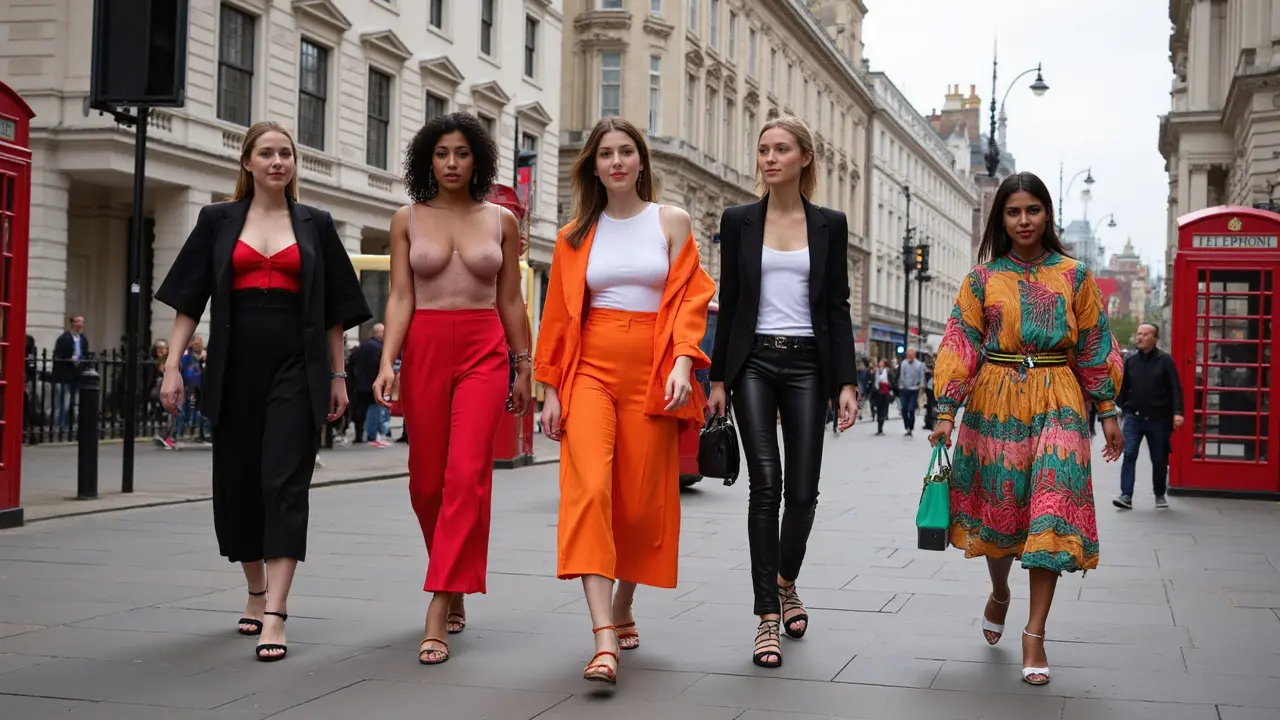
You’ve seen them-women walking through Covent Garden with coffee in one hand and a tablet in the other, chatting on the phone in fluent Mandarin while waiting for the Tube, or sitting in a co-working space in Shoreditch, sketching out the next big app. They’re not waiting for permission. They’re not asking if they’re ready. They’re just doing it. These are the London girls who turn dreams into reality.
They’re not just working-they’re building
Forget the old stories about London being a city of stiff upper lips and quiet ambition. Today’s London is powered by a new kind of energy. It’s the kind that comes from a 24-year-old Nigerian-British designer launching a sustainable fashion brand from her flat in Peckham. Or a 31-year-old Indian engineer who built an AI tool to help small clinics in South London manage patient records-no investors, no grants, just late nights and relentless focus.These aren’t outliers. They’re the new normal. According to a 2024 report by London & Partners, over 42% of startups founded in Greater London in the last three years had at least one female founder. That’s higher than any other major European city. And it’s not just tech. It’s food trucks turned restaurants, art galleries in abandoned warehouses, dance studios in basement flats, and tutoring platforms run by former teachers who got tired of the system.
What makes these women different?
It’s not talent alone. Plenty of talented people exist. What sets these women apart is how they handle failure. One woman I spoke to, Amina, started three businesses before her fourth-Amae Beauty-took off. Her first was a subscription box for Afro-textured hair products. It failed because she didn’t understand logistics. Her second was a pop-up salon in Brixton. It failed because she didn’t price correctly. The third? She lost her savings to a bad partner. But she didn’t quit. She saved every pound from her part-time job at a bookstore, learned accounting from YouTube, and rebuilt.That’s the pattern. These women don’t see setbacks as endings. They see them as data points. They tweak, pivot, ask for feedback, and try again. And they do it without waiting for a mentor to hand them a roadmap. They build their own.
Where do they start?
Most of them begin with something small. A Facebook group. A local market stall. A free Canva template. A £50 loan from a cousin. One woman, Priya, started her online bakery from her kitchen in Walthamstow. She posted photos of her cardamom cakes on Instagram. Three weeks later, someone DM’d her asking if she’d make a cake for their wedding. She said yes. She didn’t have a business license yet. She didn’t have a website. But she showed up. And by the end of the year, she had 12 regular clients and a rented commercial kitchen in Hackney.They don’t wait for perfect conditions. They make the conditions perfect by doing the work.
What’s available in London? More than you think
If you’re looking for examples, you don’t have to go far. Walk into any independent coffee shop in Camden or Dalston, and you’ll likely see a woman running it. She might also be teaching yoga on weekends, writing a novel at night, and managing a podcast about mental health for young women of color.Here’s what’s out there:
- Female-led fintech startups helping gig workers save automatically
- Women who turned vintage clothing reselling into six-figure businesses on Depop
- Black women creating digital safe spaces for survivors of trauma
- Young mothers building online academies for kids with learning differences
- Trans women launching beauty brands that actually work for diverse skin tones
London doesn’t just tolerate these women-it actively fuels them. The city has over 200 co-working spaces that offer free workshops for female founders. There are grants from the Mayor’s Office for women-led creative projects. Libraries in boroughs like Lambeth and Tower Hamlets host monthly “Pitch Night” events where women can test their ideas in front of real investors.

How to find these women-and learn from them
You don’t need to be a CEO to connect with them. Start local. Attend a free event at your nearest library. Join a Meetup group like “London Women in Tech” or “Female Founders London.” Follow hashtags like #LondonWomenWhoBuild or #SheBuiltThis on Instagram. Many of them post real-time updates-how they got their first client, what went wrong last week, how they handled burnout.One woman, Leila, runs a weekly “Coffee & Confessions” meetup in Clapham. No pitches. No networking. Just women talking honestly about what’s working and what’s not. She doesn’t charge. She doesn’t promote it. Yet 80 women show up every month. Why? Because they’re tired of polished Instagram feeds. They want the messy, real stuff.
What to expect when you start
If you’re thinking about starting something, here’s what actually happens:- You’ll feel alone-even when you’re surrounded by people.
- You’ll second-guess yourself every morning.
- You’ll get ignored by people you thought would support you.
- You’ll have days where you cry in the shower because you’re tired.
- And then, out of nowhere, someone will message you: “Your post changed how I see myself.”
That’s the moment it all becomes worth it. Not the money. Not the followers. That one sentence. That’s the fuel.
Pricing your dream: What it costs to build
There’s no set price tag for turning a dream into reality. But here’s what most women spend in their first year:- £50-£200 on tools (Canva Pro, QuickBooks, domain names)
- £100-£500 on small ads (Facebook, Instagram, Google)
- £0-£1,000 on legal help (most use free templates from the British Library’s business portal)
- £0 on “coaching” (they learn from YouTube, Reddit, and trial and error)
They don’t spend on fancy courses. They spend on doing. One woman spent £80 on a second-hand laptop and £15 on a domain name. That was her entire startup budget. She’s now making £4,000 a month.

Safety and boundaries: What no one tells you
Building something big in London comes with risks. You’ll get unsolicited DMs. You’ll be asked to work for “exposure.” You’ll be told you’re “too aggressive.” You’ll be ignored by men who think you’re “lucky” to be taken seriously.Here’s how these women protect themselves:
- They never share bank details until a contract is signed.
- They use platforms like Stripe or PayPal for payments-never cash transfers.
- They keep personal info off public profiles.
- They have a trusted friend who knows their schedule.
- They say no. Often. And without apology.
They don’t need permission to be safe. They know their worth.
London Girls vs. Other Cities: What’s Different?
| Factor | London | Paris | Berlin | Amsterdam |
|---|---|---|---|---|
| Access to funding for women-led startups | High-£200M+ allocated annually | Moderate-limited grants | High-strong public support | Moderate-focus on tech only |
| Networking opportunities | Extensive-daily events across boroughs | Restricted-often invite-only | Strong-open community culture | Good-but language barrier |
| Cost to start a business | Low to moderate | High-strict regulations | Low-simple bureaucracy | Moderate |
| Support for multicultural founders | Very strong | Weak | Moderate | Moderate |
| Public recognition of female entrepreneurs | High-media coverage, awards, events | Low-still male-dominated narratives | Moderate | High in tech, low elsewhere |
London doesn’t have the cheapest rent or the easiest bureaucracy. But it has something rarer: visibility. When a woman in London succeeds, the city notices. And then it cheers.
Frequently Asked Questions
Are these women really making money, or is it just hype?
They’re making real money. A 2024 survey by the London Chamber of Commerce found that 68% of female-founded businesses in London were profitable within 18 months. Some are making six figures. Others are reinvesting profits into community projects. It’s not about fame-it’s about sustainability. One woman runs a free coding bootcamp for girls in East London using income from her design agency. That’s not hype. That’s impact.
Do I need a degree to be one of these women?
No. Many of the most successful women in London didn’t finish university. One founder of a popular AI tool for small businesses dropped out of King’s College to build her product. Another runs a thriving bakery without ever taking a business class. What matters is grit, curiosity, and the willingness to learn. Libraries, YouTube, and free online courses from the Open University are just as valuable as a diploma.
What if I’m scared I’ll fail?
Every single one of them was scared. The difference? They did it anyway. One woman told me, “I didn’t wait until I felt brave. I became brave by doing.” Start small. Make one post. Send one email. Say yes to one opportunity. Action shrinks fear. Not the other way around.
Can I do this while working a full-time job?
Absolutely. Most of them started that way. They woke up at 5 a.m. to work on their side hustle. They used lunch breaks to research. They gave up weekends for a year. It’s not easy, but it’s possible. You don’t need to quit your job to begin. You just need to start showing up-consistently.
Where do I find the first customer?
Look where you already are. Ask your friends. Post in local Facebook groups. Offer your service for free to one person in exchange for feedback. That first person is your proof. Once you have one, the second comes faster. And the third. And then, suddenly, you’re not asking for customers-you’re turning them away.

Jodie Rae Plaut
January 1, 2026 AT 05:56Okay but let’s be real-London’s ecosystem for female founders is next level because of the infrastructure, not just grit. Free workshops at libraries? Mayor’s grants? Co-working spaces that actually host pitch nights? That’s systemic support, not luck. Most cities don’t even have the bandwidth to offer this. And the multicultural angle? Huge. In the US, you’re still fighting to be seen as ‘legitimate’-here, you’re just another founder with a story. No wonder the stats are insane.
Also, the fact that they’re using free templates from the British Library? Genius. Stop spending on $500 ‘business coaching’ courses when the public library has a whole damn toolkit. I’ve sent this to every woman I know starting a side hustle.
And Leila’s Coffee & Confessions? That’s the real MVP. No pitch decks. No fake hustle porn. Just raw, unfiltered ‘I cried in the shower last Tuesday’ energy. We need more of that everywhere.
Colin Napier
January 3, 2026 AT 02:13Let me correct a few things here. The 42% figure is misleading-it includes part-time side hustles and micro-businesses that don’t even register as formal enterprises. The real percentage of women-led, venture-backed startups in London is closer to 18%. Also, the comparison table is flawed: Berlin’s bureaucracy is simple? Only if you ignore the 14-month wait for a Gewerbeschein. And Paris? The funding gap is worse than stated-women receive 3x less than men in public grants, period. And don’t get me started on the ‘no degree needed’ myth-many of these women have degrees, they just don’t advertise them because they know people still doubt them. This article reads like a PR piece for London & Partners.
Patsy Ferreira
January 3, 2026 AT 10:30First off-‘they’re just doing it’? No. They’re doing it *despite* the system. And the article keeps saying ‘they don’t wait for permission’-but they absolutely do, they just wait for the right grant, the right mentor, the right incubator. And the spelling? ‘Co-working’? It’s ‘coworking’. One word. Always. And ‘DM’d’? That’s not even proper grammar. It’s ‘direct messaged’. And ‘£50 loan from a cousin’? That’s not a startup strategy, that’s a family favor. Also, ‘she didn’t have a business license yet’? That’s illegal in the UK. You can’t legally sell food without one. This whole piece is dangerously misleading. And why is ‘Amae Beauty’ capitalized like a proper noun but ‘YouTube’ isn’t? Inconsistent. Ugh.
Also, the table says London has ‘high’ public recognition-but where are the awards? The BBC profiles? The FT features? Name three. I dare you.
William Terry
January 4, 2026 AT 02:38Man I love this so much. I’ve been watching women in London build stuff for years and nobody talks about how quiet the hustle is. No flashy launch parties. No LinkedIn posts with candles and mantras. Just someone showing up at 5am to package cakes, then going to their 9-5. That’s the real story.
And the part about saying no? That’s the secret sauce. Most people don’t realize how much energy you waste saying yes to the wrong people. I’ve seen women turn down free exposure offers that would’ve eaten up 40 hours of their week. They say no. And then they get paid. And then they grow.
Also-£80 on a laptop and £15 on a domain? That’s the most beautiful thing I’ve read all year. No investors. No VC drama. Just a woman with a plan and a Wi-Fi connection. That’s the future.
Peter Jones
January 5, 2026 AT 13:32This is a well-researched and compelling piece, but I’d like to offer some nuance. The success of female founders in London is not solely attributable to cultural factors or personal grit. It’s also a function of demographic density, public investment, and the historical presence of diaspora communities that facilitate informal capital networks. The fact that 200+ co-working spaces exist means that physical infrastructure enables collaboration. This is replicable elsewhere-but only with deliberate policy intervention.
Additionally, the article implies that failure is merely a ‘data point,’ which minimizes the emotional and financial toll. Many women face housing insecurity, mental health strain, and isolation during these early stages. The resilience is real-but so is the cost. We should celebrate the outcomes without romanticizing the struggle.
Finally, the mention of libraries as knowledge hubs is critical. Public institutions are the unsung heroes of grassroots entrepreneurship. More cities should model this.
Theophilus Twaambo
January 5, 2026 AT 18:47Let me break this down. The article says women ‘don’t wait for a mentor’-but then it references Leila’s meetup, the British Library’s business portal, the Mayor’s Office grants, the co-working workshops-so they DO wait for mentors, they just call them ‘free events’ and ‘community resources.’ That’s not independence, that’s institutional dependency. And the claim that they ‘don’t spend on coaching’? That’s laughable. They’re spending on free coaching-just disguised as ‘YouTube tutorials’ and ‘Reddit threads.’ That’s still coaching. And why is the article ignoring the fact that most of these women are middle-class? The ones without family support or safety nets? They’re not in these stories. This is a curated fantasy for privileged women with Wi-Fi and a decent credit score. Also-‘she lost her savings to a bad partner’? That’s domestic abuse. Why is that glossed over as a ‘business failure’? That’s irresponsible.
Douglas McCarroll
January 7, 2026 AT 08:33What I love about this piece is how it reframes entrepreneurship as a series of micro-actions, not one grand leap. That’s the truth. You don’t need a vision statement. You need a Canva template, a Facebook group, and the courage to say ‘yes’ to one person who DMs you. That’s how real change happens.
And the part about safety? Crucial. No one talks about how predatory the ‘exposure’ culture is-especially toward women of color. These women aren’t just building businesses-they’re building boundaries. That’s leadership.
Also-this isn’t just about London. It’s a blueprint. The model-low-cost tools, community support, iterative learning-is universal. You don’t need a city like London to start. You just need to start. One post. One call. One day. And then, slowly, you build your own ecosystem. That’s the real magic.