
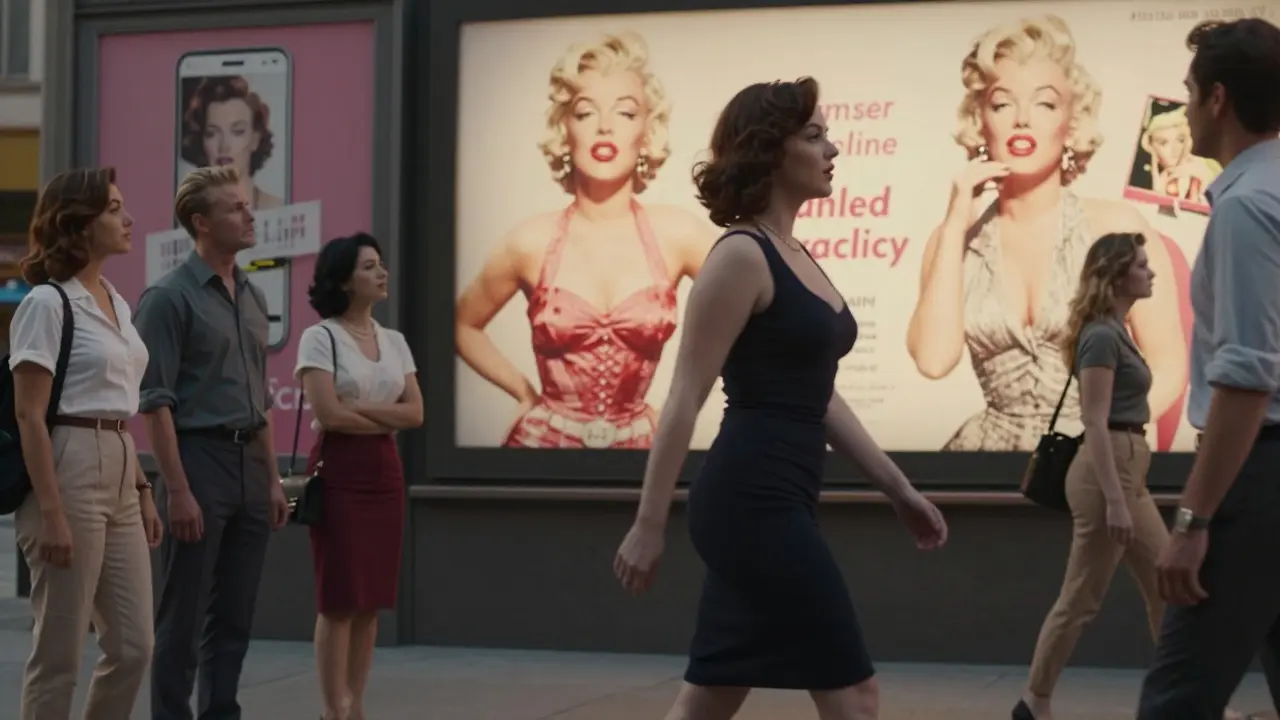
You’ve seen them in ads, on screens, in magazines. Busty babes are everywhere. But why do so many men seem obsessed? It’s not just about looks. It’s not just about hormones. And it’s definitely not as simple as "they’re just hot." There’s something deeper going on-something rooted in biology, culture, and even history.
Why This Isn’t Just About Sex
Let’s get real: if it were only about sex, we’d see the same obsession with every body type. But we don’t. Men aren’t equally fixated on flat chests, hourglass figures, or athletic builds. There’s a clear pattern-and it’s not random.
Studies from the University of Cambridge and the University of Texas have shown that men across cultures consistently rate women with fuller busts as more attractive. Not because they’re told to. Not because of advertising. But because their brains respond to it. In fact, brain scans show increased activity in the reward centers when men view images of women with larger busts-even when they claim to prefer smaller sizes.
This isn’t about objectification. It’s about instinct. Evolution shaped our brains to notice certain cues that once signaled health, fertility, and survival potential. A fuller bust, especially in a young woman, was historically linked to higher estrogen levels, better nutrition, and the ability to bear and nourish children. It’s a biological signal, not a cultural one.
The Science Behind the Attraction
Here’s what the data says: waist-to-chest ratio matters more than absolute size. A woman with a 0.7 waist-to-hip ratio and proportionally larger busts tends to score higher on attraction scales than someone with the same bust size but a higher waist-to-hip ratio. Why? Because that ratio correlates with optimal hormone balance and reproductive health.
And it’s not just men. Women also tend to rate women with fuller busts as more confident and socially dominant. That perception spills over into how men see them-busty women are often assumed to be more self-assured, more approachable, more in control. That’s not fair. But it’s real.
Let’s not forget the role of contrast. A curvy figure creates visual balance. The eyes naturally follow curves, and a bust that stands out against a narrower waist creates a shape our brains are wired to find pleasing. Think of it like a well-composed photo-balance, contrast, rhythm. Our brains love it.
Culture Amplifies Biology
Biology gives us the foundation. Culture turns it into a phenomenon.
Think about the 1950s. Marilyn Monroe, Jayne Mansfield-they weren’t just popular because they were actresses. They were symbols of post-war prosperity. Full figures meant you had enough to eat, you weren’t struggling, you were thriving. That association stuck.
Fast forward to today. Social media doesn’t invent desire-it amplifies it. Algorithms show you what you’ve clicked on before. If you’ve watched a few videos of women with fuller busts, you’ll keep seeing more. That creates the illusion that everyone’s obsessed. But it’s not obsession. It’s reinforcement.
And let’s be honest: the adult entertainment industry has spent decades marketing this look as the "ideal." That doesn’t mean it’s the only ideal. But it does mean it’s the most visible. And visibility breeds familiarity. Familiarity breeds comfort. Comfort breeds attraction.
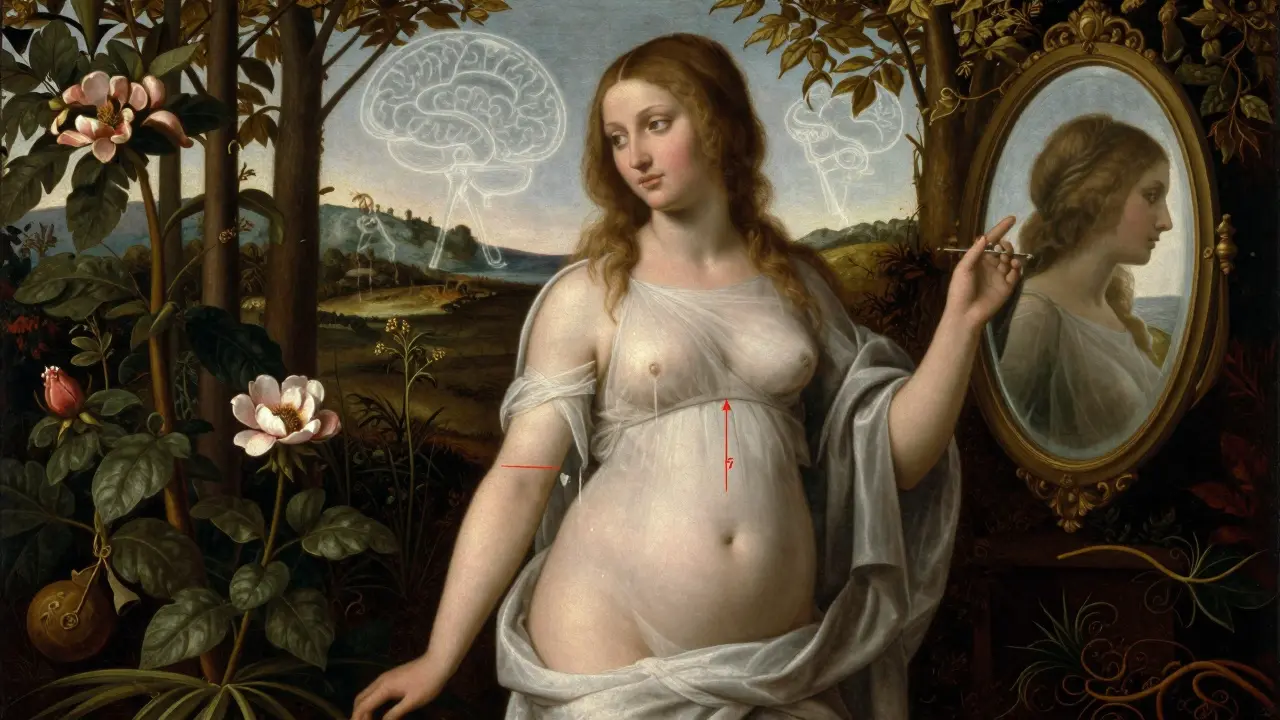
It’s Not About Size-It’s About Perception
Here’s the truth most people miss: men aren’t obsessed with big breasts. They’re obsessed with the perception of fertility, confidence, and vitality that those features represent.
A woman with a smaller bust who carries herself with confidence, strong posture, and clear eye contact can trigger the same neural response as someone with a larger bust. Why? Because the brain doesn’t just see shape-it reads context. It reads energy. It reads signal.
That’s why some men are drawn to women with smaller chests who wear tight clothes, walk with purpose, and own their presence. Their body language says "I’m in control," and that’s just as powerful as any curve.
So if you think it’s just about size, you’re missing the point. It’s about the entire package: how the body moves, how the person carries themselves, how they make you feel when you’re around them.
What This Means for Women
If you’re a woman reading this and you’re thinking, "Do I need to change my body to be desired?"-the answer is no. Not at all.
But if you want to understand why some men react the way they do, it helps to know the psychology behind it. You don’t have to play into it. But you don’t have to be confused by it, either.
Many women feel pressure to conform. They get told they’re "too much" or "not enough." But the truth is, attraction isn’t a test you pass or fail. It’s a reaction. And reactions vary wildly.
Some men will notice your smile more than your chest. Others will respond to your laugh. A few might fixate on your curves. None of that defines your worth. But understanding the patterns? That gives you power.
What This Means for Men
And if you’re a man wondering why you’re drawn to this look-don’t feel guilty. You’re not broken. You’re human.
But here’s the next step: don’t let instinct become obsession. Don’t reduce a woman to her bust. Don’t assume her personality, intelligence, or value is tied to her shape.
Real attraction isn’t about what you see first. It’s about what you notice last. The way she argues her point. The way she remembers your coffee order. The way she handles stress. Those things stick. The rest fades.
Men who build real connections don’t just stare at curves. They listen to stories. They remember details. They fall for people-not body parts.
Is This Changing?
Yes. Slowly.
Younger generations are more likely to value diversity in body types. Social media influencers with different shapes are gaining massive followings. The "busty babe" archetype is no longer the only standard.
But change takes time. Biology doesn’t disappear overnight. Culture doesn’t flip a switch. What’s happening now is a blending. Men are still drawn to curves-but they’re also drawn to confidence, humor, ambition, and authenticity.
The future isn’t about replacing one ideal with another. It’s about expanding the definition of what’s attractive.
Final Thought: Attraction Is a Conversation
At the end of the day, attraction isn’t a one-way street. It’s a dance. A conversation between biology, experience, emotion, and context.
Some men will always be drawn to fuller figures. That’s normal. That’s natural. But the most meaningful connections? They happen when you see the whole person-not just the part that catches your eye first.
So next time you see a "busty babe," ask yourself: am I seeing a person-or just a stereotype?
Why do men find busty women more attractive?
Men are often drawn to busty women because of evolutionary cues. Fuller busts historically signaled higher estrogen levels, better nutrition, and greater fertility. Brain scans show increased activity in reward centers when viewing these features-even when men claim to prefer smaller sizes. It’s not just about looks-it’s about subconscious signals tied to survival and reproduction.
Is it just about size, or does shape matter too?
Shape matters more than size. Research shows that waist-to-chest and waist-to-hip ratios are stronger predictors of attraction than absolute bust size. A balanced, curvy silhouette creates visual contrast that our brains find naturally pleasing. A woman with a smaller bust but a 0.7 waist-to-hip ratio can be just as attractive as someone with a larger bust and a less proportional figure.
Are women with bigger busts seen as more confident?
Yes, studies show that people-including both men and women-often perceive women with fuller busts as more confident, socially dominant, and self-assured. This isn’t based on reality, but on unconscious bias. Society has linked larger busts with sexuality and boldness, so the brain makes assumptions. That perception can influence how men interact with them, even if it’s not accurate.
Has social media made this obsession worse?
Social media doesn’t create the attraction-it amplifies it. Algorithms show you more of what you click on, creating an echo chamber. If you watch a few videos of busty women, you’ll see hundreds more. That makes it feel like everyone’s obsessed. But it’s just reinforcement, not a new trend. Real attraction is deeper than what’s trending online.
Do women prefer men who like busty women?
Some women do, especially if they feel their body type is validated. But many women are tired of being reduced to their chest size. What most women want is to be seen as whole people-not just a body part. Attraction based on one feature can feel reductive. Real connection comes from seeing someone’s mind, humor, and character-not just their silhouette.
Is it possible to be attracted to busty women without objectifying them?
Absolutely. Attraction isn’t objectification. Objectification happens when you reduce someone to their body parts and ignore their thoughts, feelings, and personality. You can notice physical features and still respect the person behind them. The difference is in how you treat them-do you listen? Do you ask questions? Do you care about their life outside of how they look? That’s what separates appreciation from objectification.

La'Sherrell Robins
January 25, 2026 AT 07:36OMG YES 😍 this is why I stopped wearing bras to bed-my boobs are my superpower, not a crime 🍑✨ biology didn’t lie, and neither did my ex’s face when he saw me in that lace crop top. stop acting like attraction is a moral failing. it’s evolution, baby. 🫶
Nick LoBrutto
January 26, 2026 AT 21:35I get what you’re saying about the waist-to-hip ratio being more important than size-but I’ve seen guys who swear they only like small chests, then turn around and binge-watch videos of curvy models. It’s weird how our brains lie to us. I think the real issue isn’t the attraction-it’s how we’re taught to act on it. Like, noticing is fine. Staring? Not cool.
Tatiana Pansadoro
January 28, 2026 AT 01:32Let’s not forget-this isn’t just biology. It’s American culture. We celebrate curves in music videos, in Hollywood, in fashion. We’ve made this the standard. And if you’re not on board? You’re just not with the program. 🇺🇸🔥
Cynthia Farias
January 29, 2026 AT 13:28One cannot help but observe that the reduction of human attraction to neurochemical reward pathways, while scientifically compelling, inadvertently reinforces a mechanistic ontology of the human subject-one that erases agency, dignity, and the sacred mystery of interpersonal resonance. We are not mere stimulus-response machines. To reduce love to a waist-to-hip ratio is to mistake the map for the territory.
Antony Silson
January 29, 2026 AT 19:15Studies say men prefer fuller busts. But the sample sizes were mostly college students in the Midwest. Also, most men don’t even know what a waist-to-chest ratio is. This is just overthinking with a lab coat.
Rick Vaughn
January 29, 2026 AT 22:30Biology doesn't care about your feelings. The data is clear. Stop pretending this is about empowerment. It's about evolution. Accept it or stay confused.
Jenna Song
January 31, 2026 AT 02:19Oh please. If it’s all about evolution, why do men go wild over skinny models in Paris? Or the ‘thicc’ TikTok girls? Or the ‘fit but not too fit’ influencers? There’s no universal standard-just whatever’s trending in their feed. Your ‘biology’ is just algorithmic gaslighting.
Kerrigan Arnold
January 31, 2026 AT 06:16It’s okay to be drawn to curves-it’s okay to notice. But real connection? That’s built when you ask how someone’s day went, not just how they look in a bikini. The body gets attention. The soul gets loyalty. Choose wisely.
Zachary Smith
February 1, 2026 AT 10:10I’m from the U.S., but I’ve lived in Japan and Brazil. In Tokyo, women with smaller frames are adored. In Rio, curves are celebrated. The common thread? Confidence. Not bust size. The real universal? A woman who owns her space. That’s what draws people in-no matter where you are.