
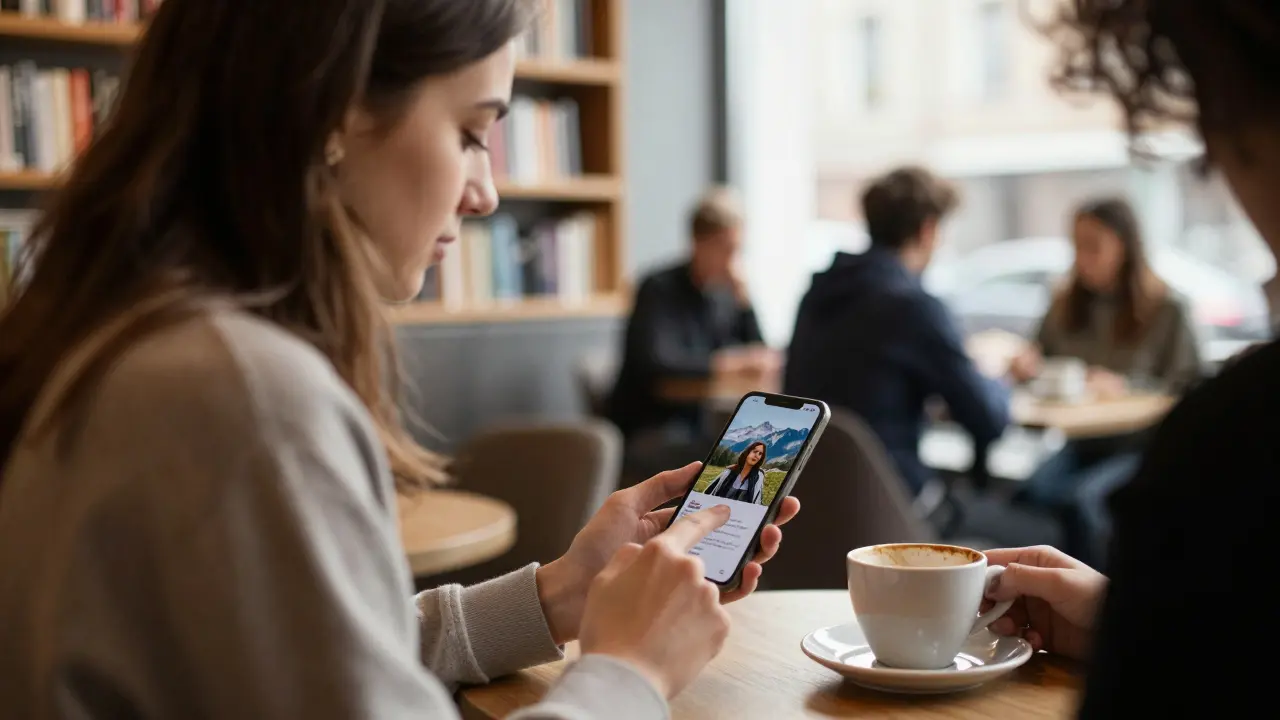
You’ve probably seen the memes: a guy swiping left on Tinder in Berlin, a woman in Madrid waiting for a match on Bumble, someone in Warsaw scrolling past 50 profiles before finding one that doesn’t look like a stock photo. But here’s the real question-do Europeans actually use Tinder or Bumble? And if so, how differently than Americans or Asians?
The answer isn’t just yes or no. It’s messy, cultural, and shaped by everything from privacy laws to dating norms. Let’s cut through the noise.
Quick Takeaways
- Tinder is the most widely used dating app across Europe, especially in Western and Southern countries.
- Bumble is growing fast but remains secondary-popular with women who want to control the first move.
- In Eastern Europe, apps like Mamba and LovePlanet still hold strong local dominance.
- Privacy concerns and data laws make Europeans more cautious about sharing personal info on apps.
- Swiping culture is less obsessive in Europe. People use apps to meet, not to hunt for 100 matches.
What’s Really Going On With Dating Apps in Europe?
When Americans talk about dating apps, they’re often talking about endless swiping, ghosting, and apps as full-time jobs. In Europe? It’s more like a side hustle. People use Tinder or Bumble to meet someone for coffee, not to build a dating portfolio.
A 2025 survey by the European Digital Rights Initiative found that 41% of Europeans aged 18-35 have used a dating app at least once. But only 12% use them daily. Compare that to the U.S., where 34% of young adults use apps daily, and you see the difference.
Why? Europeans tend to have stronger social networks. Friends introduce you. You meet people at bars, festivals, or through work. Apps are a backup, not a primary tool. That’s why profiles are often more honest-less Photoshop, more real life.
Tinder: The Default Choice Across the Continent
If you walk into any bar in Lisbon, Paris, or Prague, you’ll see someone scrolling on Tinder. It’s the default. Why?
- It’s simple. Swipe right, swipe left. No rules.
- It’s everywhere. Nearly every European country has a large user base.
- It works for casual and serious dating alike.
In Spain, 68% of app users say Tinder is their first choice. In Sweden, it’s 62%. Even in Germany, where privacy is taken seriously, Tinder still leads with 57% usage among 18-30-year-olds, according to Statista’s 2025 European Tech Report.
But here’s the twist: Europeans don’t use it like Americans. Profiles often include real job titles, hobbies, and even favorite books. No one says “I love travel” without naming a place they’ve actually been. Fake photos? They get reported fast.
Bumble: The Woman-First App That’s Gaining Ground
Bumble launched in Europe in 2016. At first, it felt like a novelty. Why should a woman message first? Isn’t that awkward?
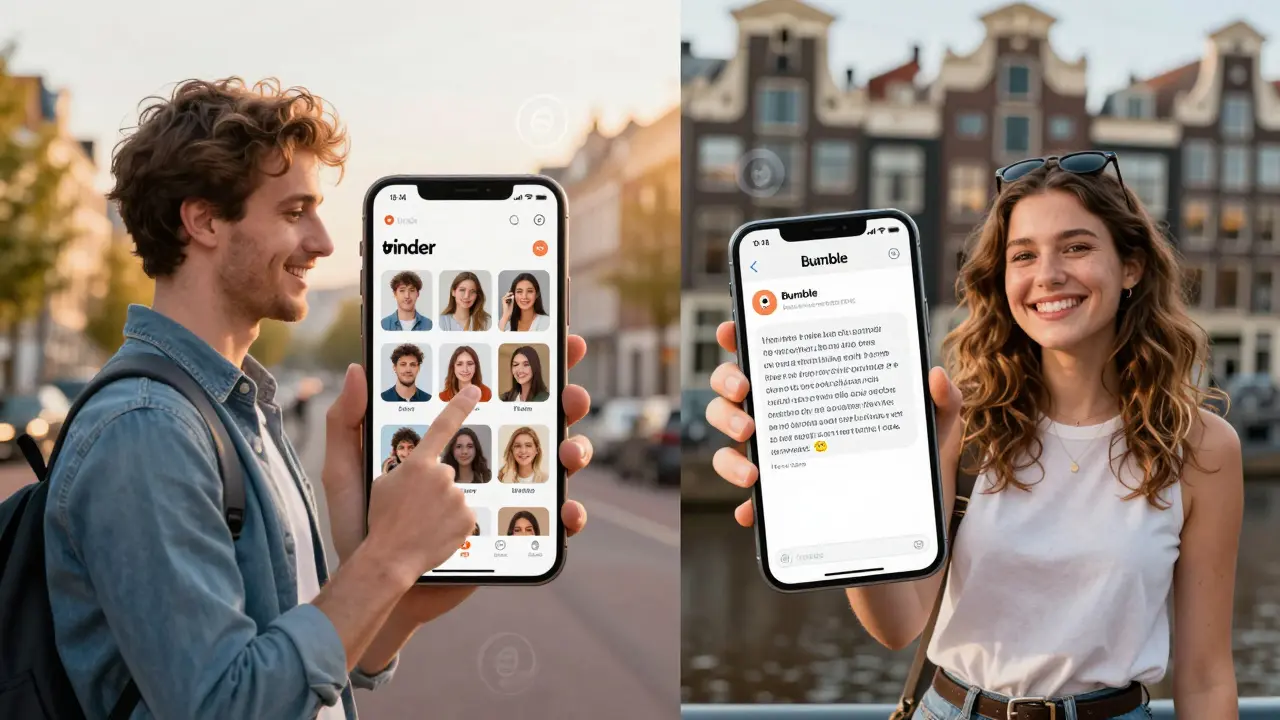
Turns out, it’s not. In countries like France, the Netherlands, and the UK, Bumble’s user base grew 40% between 2022 and 2025. Why? Because women are tired of being the ones who get ignored after saying hi.
In Amsterdam, 31% of women under 30 say they prefer Bumble because they don’t have to wait for a man to make the first move. And it’s not just about power-it’s about safety. Many women in Europe say they feel less harassed on Bumble. The 24-hour rule (you must message within a day after a match) keeps things moving, but also reduces ghosting.
Still, Bumble isn’t replacing Tinder. It’s complementing it. Most Bumble users also have Tinder. They use Bumble for more serious connections, Tinder for casual ones.
Eastern Europe: The Local Apps Still Rule
Don’t assume Europe is all the same. In Poland, Russia, Ukraine, and parts of the Balkans, local apps still dominate.
- Mamba (Russia, Ukraine): Over 15 million active users. Think of it as Russia’s version of Tinder, but with more detailed profiles and video chat built-in.
- LovePlanet (Russia, Belarus): Popular with older users (30+). Focuses on long-term relationships.
- OkCupid (Serbia, Croatia): Still has a loyal following because of its personality quizzes.
Why do these apps survive? Because they’re built for local culture. Mamba lets you filter by religion, political views, and even whether you smoke. That’s something Tinder doesn’t offer-and Europeans in these regions value that control.
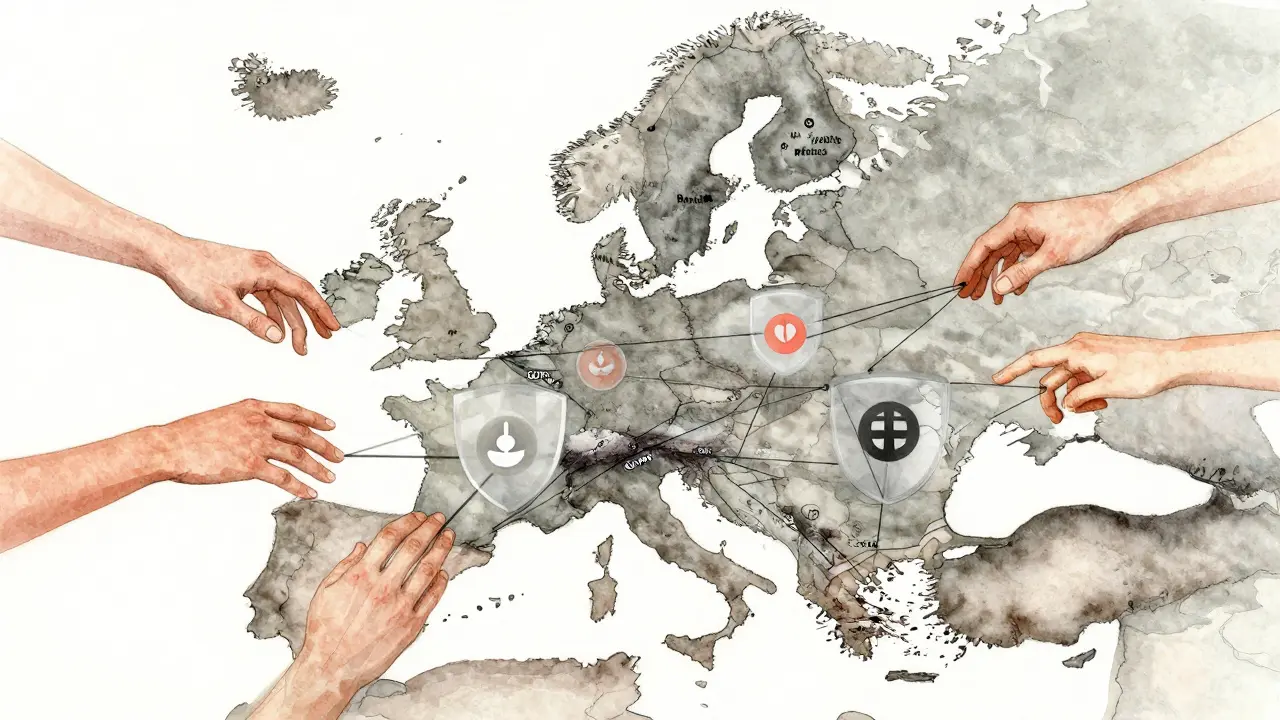
Also, data privacy laws in the EU make it harder for U.S.-based apps to collect and sell user data. Local apps don’t have to follow the same rules, so they can offer more features without getting shut down.
Why Europeans Are More Cautious With Dating Apps
Remember GDPR? The EU’s strict data protection law? It changed everything.
Before 2018, Tinder and Bumble could track your location, sell your data to advertisers, and even use your photos for targeted ads. Now? They need your explicit permission for every single thing.
As a result, Europeans are more skeptical. They don’t just tap “Accept” on a terms-of-service popup. They read them. They turn off location tracking. They use fake names. They don’t post their workplace.
A 2024 study by the University of Copenhagen found that 63% of European app users avoid sharing their real last name. 58% use a different photo than their main social media profile. And 45% say they’ve deleted an app after realizing how much data it was collecting.
This caution affects how people use the apps. No one’s posting selfies on the Eiffel Tower with a caption like “Single and ready to mingle.” Instead, you’ll see a photo of someone hiking in the Alps, or holding a book, or cooking pasta. Real moments. Real life.
How Europeans Use Dating Apps Differently
Let’s compare real behavior:
- Swiping speed: Americans swipe 100+ times in 10 minutes. Europeans swipe 10-20 times in 30 minutes.
- Message length: Americans send “hey” or “u up?” Europeans send: “Saw you like hiking. Ever been to the Dolomites?”
- Meeting up: Americans wait 3-5 days. Europeans often meet within 24-48 hours after matching.
- What they look for: Americans want “chemistry.” Europeans want “shared values.”
One woman in Berlin told me: “I don’t want someone who says they love travel. I want someone who can tell me which train to take from Prague to Budapest and why.” That’s the difference.
Tinder vs Bumble: A Side-by-Side Look
| Feature | Tinder | Bumble |
|---|---|---|
| Most Popular In | Spain, Italy, Portugal, France, Germany | UK, Netherlands, Sweden, Denmark |
| Primary User Base | 18-35, mixed gender | 20-32, majority female |
| First Message Rule | Either person can message | Women must message first (hetero matches) |
| Match-to-Meet Time | 2-5 days | 1-3 days |
| Profile Authenticity | Moderate (more fake photos) | High (women vet profiles harder) |
| Used For | Casual dating, hookups, friendships | Relationships, meaningful connections |
| Privacy Settings | Basic (limited control) | Stronger (block location, hide age) |
So if you’re a man in Barcelona, Tinder is your best bet. If you’re a woman in Copenhagen and you want to avoid the creepers, Bumble gives you more control.
What to Expect If You Use These Apps in Europe
You won’t get 50 matches in an hour. You might get one or two that actually respond.
But when they do? It’s different. People show up on time. They ask questions. They talk about their jobs, their families, their favorite movies. They don’t just say “you’re cute.”
First dates are often in cafés-not clubs. You’ll get coffee, maybe a snack, and a real conversation. No one’s trying to impress. Everyone’s trying to connect.
And if you’re not from Europe? You’ll notice one thing right away: people don’t brag. No one says “I own a company.” They say, “I work in logistics.” No one says “I’ve been to 15 countries.” They say, “I went to Croatia last summer and ate the best grilled sardines I’ve ever had.”
How to Use These Apps Without Getting Scammed
Scams exist everywhere. But in Europe, they’re often more subtle.
- Never send money. No matter how sad their story is.
- Use video calls before meeting. If they refuse, walk away.
- Meet in public. Always. Even if they say “my place is quiet.”
- Check their profile across platforms. Do they have a LinkedIn? Instagram? Real friends? Fake profiles rarely do.
- Report suspicious profiles. European apps have faster response times than U.S. apps. Use the report button.
Also, avoid apps that ask for your ID or passport. Legit apps don’t need that. If they do, it’s a red flag.
Frequently Asked Questions
Is Tinder better than Bumble in Europe?
It depends on what you want. Tinder is bigger and better for casual dating or meeting lots of people. Bumble is better if you want to meet someone serious and you’re a woman who wants to control the conversation. Most Europeans use both.
Do Europeans use dating apps for marriage?
Yes, but it’s not the main reason. Many couples in France, Germany, and the UK met on apps and got married. But most users are looking for relationships, not engagement rings. Apps are a tool, not a destiny machine.
Are dating apps popular in rural Europe?
Less so. In small towns in Romania, Bulgaria, or Poland, people still rely on friends, church groups, or local events. But even there, apps are growing. Younger people in rural areas use them more than their parents ever did.
Can I use Tinder or Bumble if I don’t speak the local language?
Yes. English is widely used in dating apps across Europe. Most profiles in major cities include English. Apps also have built-in translation tools now. But learning a few phrases in the local language? That’s a huge plus. It shows effort.
Why do some Europeans say dating apps are "too American"?
Because they feel too fast, too superficial, and too focused on looks. Europeans value depth over speed. Apps like Tinder feel like a game. Many prefer apps that encourage longer conversations or have personality questions built in. That’s why local apps still survive.
Final Thought: It’s Not About the App. It’s About the Mindset.
Tinder and Bumble aren’t magic. They don’t guarantee love. They don’t even guarantee a good date.
What they do is give you access. Access to people you wouldn’t meet otherwise. Access to conversations you wouldn’t have started. Access to real, messy, human connections.
Europeans don’t use these apps because they’re desperate. They use them because they’re curious. And that’s the difference.
If you’re going to try one, go in with patience. Be honest. Don’t ghost. And don’t expect perfection. The best matches aren’t the ones with the best photos. They’re the ones who say something real.
Jess Williams
January 27, 2026 AT 07:56It’s fascinating how Europeans treat dating apps like a quiet coffee chat-not a high-stakes game of attrition. I’ve spent too much time on Tinder in the U.S., and it feels like we’ve turned intimacy into a spreadsheet: swipes, matches, conversations, ghosting, repeat. But the idea that someone in Lisbon might swipe once, see a photo of you hiking in the Pyrenees, and say, ‘You went to the Dolomites? I got lost there in ’19-tell me how you found your way back?’-that’s the kind of connection that sticks. We’ve lost the art of curiosity here. We don’t ask; we consume.
Stephanie Suttle
January 28, 2026 AT 10:03OMG I can’t believe people still think Bumble is ‘feminist’-it’s just another way to put the emotional labor on women while pretending it’s empowerment. And don’t get me started on the ‘24-hour rule’-it’s not a feature, it’s a trap! You’re supposed to message first, but if you do, you’re ‘desperate’; if you don’t, you’re ‘cold.’ Meanwhile, men just sit there, waiting for the algorithm to hand them a snack. And why are we still pretending that ‘real photos’ exist? Everyone uses Facetune. Even the ‘hiking in the Alps’ person? Probably a stock image from Unsplash. #OverIt
Charles Mitchell
January 29, 2026 AT 20:09Really appreciate this breakdown. The cultural contrast is spot-on. In the U.S., dating apps are a full-time job-people optimize their bios like LinkedIn profiles, use AI-generated pickup lines, and treat matches like LinkedIn connections. In Europe, it’s more like, ‘Hey, you like pasta? Me too. Let’s grab a bite.’ The privacy angle is huge too-GDPR isn’t just a legal thing, it’s a mindset. People don’t trust apps with their data, so they keep it minimal. That’s why profiles feel more human. And the Eastern European apps? Totally underrated. Mamba’s features-filtering by religion, smoking habits, even political views-that’s not creepy, that’s practical. We’re so obsessed with ‘chemistry’ here, we forget that compatibility matters more than vibes.
Kiara F
January 30, 2026 AT 02:51Let’s be real-using dating apps at all is a sign of emotional laziness. Real relationships are built in person, through shared community, through church, through work, through walking your dog in the park. These apps are a symptom of a society that’s too busy to be lonely. And don’t even get me started on the ‘I’m not looking for anything serious’ crowd. That’s not freedom-it’s cowardice. You can’t outsource intimacy to an algorithm and call it progress. People used to court. Now they swipe. And we wonder why loneliness is at an all-time high.
Nelly Naguib
February 1, 2026 AT 02:18Y’all are overthinking this. It’s just apps. Not a PhD thesis. Europeans don’t care about your ‘values’ or your ‘depth.’ They care if you can cook, if you’re clean, and if you don’t talk about your ex for 45 minutes. And guess what? The ones who win? The ones who just show up. No poetry. No philosophy. Just ‘Hey, you like wine? Let’s go to that little place by the river.’ That’s it. No filters. No ‘authenticity.’ Just real. The rest? Noise. Stop analyzing. Go out. Say hi. Drink the wine. Done.