
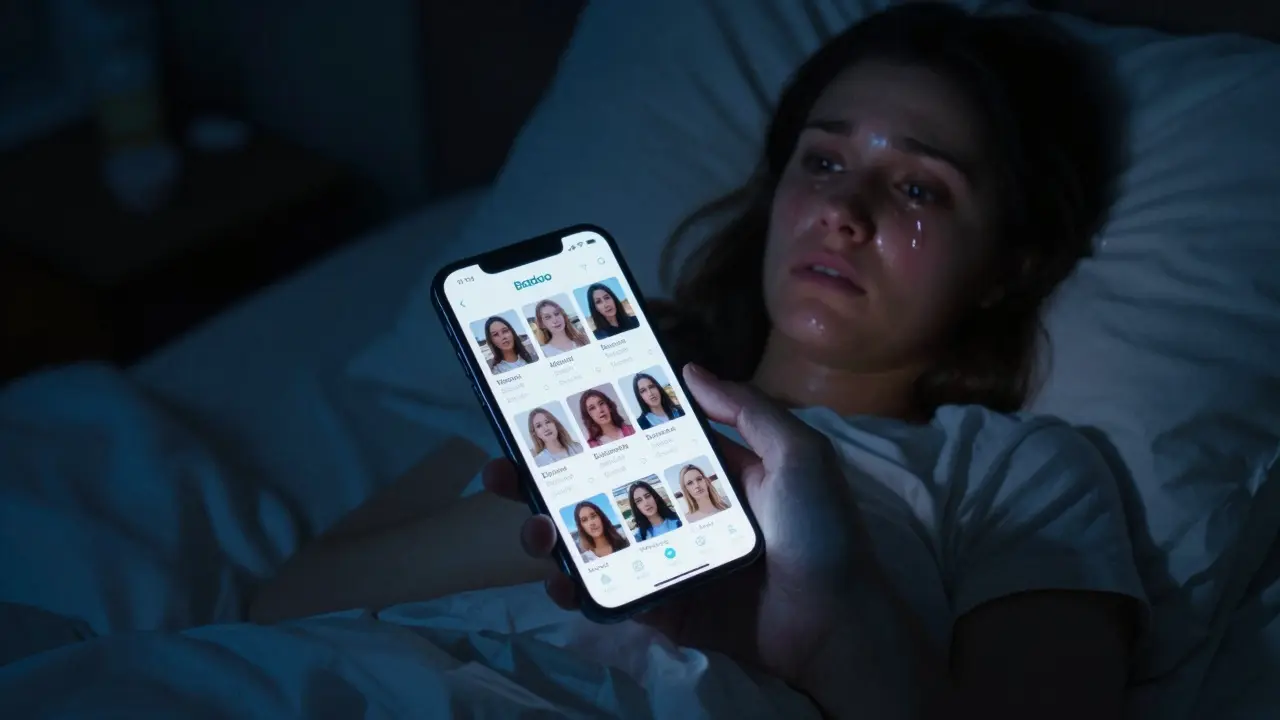
You open Badoo. Swipe right. Match. Message. They sound perfect-funny, attractive, into travel, wants to meet up. Then they ask for money. Or vanish. Or show up with a completely different face in real life. Welcome to the Badoo controversy.
Quick Takeaways
- Badoo has been accused of using fake profiles to keep users engaged and spending money.
- Many users report being targeted by bots or paid actors posing as attractive European women.
- The app encourages in-app purchases to boost visibility, often making genuine users feel like they’re losing out.
- Reports of catfishing, blackmail, and financial scams linked to Badoo profiles are common across forums and consumer protection sites.
- Despite complaints, Badoo still ranks high in app stores-partly because its algorithm favors paid accounts.
What Exactly Is the Badoo Controversy?
Badoo isn’t just another dating app. It’s one of the biggest in Europe, especially popular in countries like Russia, Spain, Brazil, and the UK. But behind the smiling photos and flirty messages, there’s a dark underbelly.For years, users have reported the same pattern: you match with someone who seems too good to be true. They message you constantly. They send sweet, personal texts. They say they’re from Ukraine, Poland, or Romania-classic "Euro date" bait. Then comes the ask: "Can you help me with my flight?" or "I lost my wallet, can you send me $200?"
When you dig deeper, you find the same photos used across dozens of profiles. Same face, different names. Same bio, different locations. Sometimes, the same woman appears as a 22-year-old student in Prague, a 28-year-old model in Madrid, and a 31-year-old single mom in Bucharest-all on the same day.
This isn’t coincidence. It’s a system.
How Badoo’s Algorithm Rewards Fake Profiles
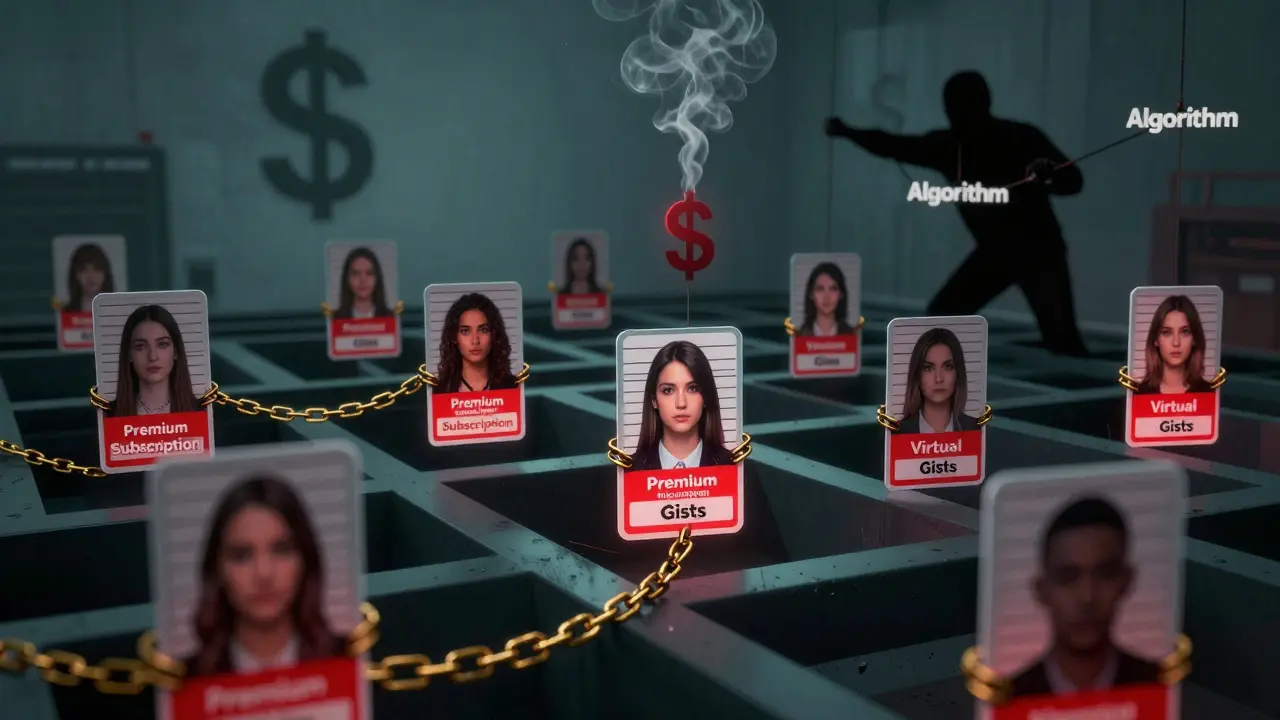
Badoo doesn’t just allow fake profiles-it encourages them. The app’s algorithm is designed to keep you scrolling, swiping, and spending.Here’s how it works: When you sign up, you’re shown a stream of attractive profiles. Most of them? Fake. They’re created by teams paid by Badoo to act as "engagement bots." They message you first. They reply fast. They use emotionally manipulative language: "I’ve never met someone like you," "I feel so connected to you," "I want to see you in person."
Why? Because the more you engage, the more likely you are to buy "Badoo Premium"-a paid upgrade that lets you see who liked you, send unlimited messages, or boost your profile to the top of the feed.
Here’s the kicker: genuine users rarely get seen. If you’re not paying, your profile gets buried. So you pay. And then you get matched with more bots. It’s a loop designed to make you feel like you’re failing at dating-when the real problem is the app itself.
Real Stories From Real Users
One user in Manchester, Mark, told his story on Reddit: "I spent £300 on Badoo Premium. Matched with a girl named Anna from Riga. We chatted for three weeks. She sent me photos of herself in front of the Latvian parliament, holding a coffee, smiling. She said she was a nurse. I flew to Riga to meet her. She never showed up. Her profile vanished. I later found the same photo on a Russian escort site."
Another user, Lisa from Leeds, said she received a message from a man claiming to be a British soldier stationed in Ukraine. He said he was stranded and needed help getting home. She sent £500. He disappeared. Police told her the profile was created two days before he messaged her-and the photos were stolen from a stock image site.
These aren’t rare cases. In 2023, the UK’s Action Fraud reported over 1,200 complaints linked to dating apps, with Badoo named in nearly 40% of them. The National Cyber Security Centre flagged Badoo as one of the top three apps for romance scams.
Why Are These Profiles So Hard to Spot?
Because they’re not sloppy. These aren’t low-effort catfishes with blurry selfies. These are professional operations. Badoo has been accused of hiring agencies in Eastern Europe to create and manage hundreds of fake accounts. Each profile has:
- High-quality, edited photos (often from stock libraries or stolen from Instagram)
- Realistic bios with local slang and cultural references
- Consistent messaging patterns that mimic real human behavior
- Delayed responses to appear "busy" or "cautious"
Some even use AI-generated voice messages to sound more authentic. You’re not just being fooled by a lonely guy in his basement-you’re being targeted by a small team with a budget.
What Badoo Says (And What They Don’t)
Badoo’s official stance? "We take user safety seriously. We use AI to detect fake profiles and remove them." But here’s the problem: they don’t tell you how many they’ve removed-or how many they’re still letting through.
They also don’t disclose that their revenue model depends on fake engagement. A 2022 investigation by the Financial Times revealed that Badoo’s parent company, Mamba, earns over 70% of its income from premium subscriptions. And guess what drives those subscriptions? The illusion of connection.
So when Badoo says they’re "working to improve authenticity," what they really mean is: "We’re trying to look good while keeping the money train running."
Comparison: Badoo vs. Other Dating Apps
| App | Fake Profile Risk | Monetization Model | Verified Profiles? | Scam Reports (UK, 2024) |
|---|---|---|---|---|
| Badoo | Very High | Premium subscriptions, virtual gifts | No | 1,200+ |
| Tinder | Medium | Tinder Gold, Boosts | Yes (optional) | 850 |
| Hinge | Low | Hinge Premium | Yes (photo verification) | 180 |
| Bumble | Low-Medium | Bumble Boost, Bumble Premium | Yes (photo verification) | 210 |
| OkCupid | Medium | OkCupid Premium | Yes (optional) | 420 |
As you can see, Badoo stands out-not for safety, but for how aggressively it monetizes deception. While apps like Hinge and Bumble have invested in verification tools, Badoo’s approach is to keep the illusion alive.

How to Stay Safe on Badoo (If You Must Use It)
If you’re already on Badoo, here’s how to protect yourself:
- Never send money. Not for flights, not for medical bills, not for "emergency" reasons. If they ask, it’s a scam.
- Reverse image search their photos. Use Google Images or TinEye. If the same face appears on multiple profiles, walk away.
- Video call before meeting. If they refuse, or always have excuses-"my phone is broken," "the Wi-Fi is bad"-it’s a red flag.
- Meet in public. Always. First meeting? Coffee shop. Daytime. No one else around? That’s a problem.
- Report and block immediately. Don’t wait for them to ask for money. Report suspicious profiles to Badoo. They won’t fix it, but it helps others.
Frequently Asked Questions
Is Badoo safe for finding real relationships?
It’s possible, but unlikely. Badoo’s system is built to keep you engaged, not to connect you with real people. While some users do find genuine matches, the odds are stacked against you. The app’s design favors paid users and fake profiles. If you’re looking for a serious relationship, apps like Hinge or even Meetup groups offer better results.
Why are so many Badoo profiles from Eastern Europe?
Because Eastern European countries have lower average incomes, making it easier to pay people to create fake profiles. Agencies in Ukraine, Romania, and Moldova have been linked to mass profile creation for dating apps. These profiles use culturally specific details to seem authentic-like mentioning "borscht," "Metro stations in Kyiv," or "winter in Bucharest." It’s not random. It’s targeted.
Can I get my money back if I was scammed on Badoo?
If you sent money to someone you met on Badoo, you’re unlikely to get it back. Badoo doesn’t guarantee transactions between users. But you should still report it to Action Fraud in the UK or your local cybercrime unit. They track patterns and may help shut down the operation if enough people report the same profile.
Does Badoo delete fake profiles?
They delete some-but only when they’re caught. There’s no public data on how many are removed daily. What we do know: the number of fake profiles remains steady, even after crackdowns. That suggests new ones are being added as fast as old ones are removed. It’s a game of whack-a-mole-and Badoo isn’t trying to win.
Should I delete Badoo altogether?
If you’ve had bad experiences, yes. If you’re still curious, try a free alternative like OkCupid or even Facebook Dating. They’re less aggressive with monetization and have better verification. Badoo’s business model thrives on frustration. Don’t let it profit from your loneliness.
Final Thoughts
Badoo isn’t evil. It’s a business. And like any business, it follows the money. If fake profiles and emotional manipulation drive subscriptions, they’ll keep using them. You’re not the first person to feel tricked. You won’t be the last.
But you can choose differently. You can walk away. You can try something real-something that doesn’t charge you to feel seen.
There are people out there who want to connect. You just have to look in places where the algorithm isn’t working against you.
Santiago Castiello
December 20, 2025 AT 01:59Badoo’s not a dating app-it’s a Skinner box with a fake Ukrainian girl on the lever.
Marissa Conrady
December 20, 2025 AT 11:26Look, I get it-dating apps are rough. But you’re not alone in feeling this way. If you’ve been burned by Badoo, take a breath. Step away. Try something that doesn’t make you feel like a ATM with a pulse. You deserve better than algorithmic manipulation. And honestly? You’re already smarter for recognizing the pattern. That’s half the battle.
Rachel Kustarjo
December 21, 2025 AT 08:40OMG I literally cried reading this. I matched with this ‘Polish ballet dancer’ who sent me voice notes in perfect English but had a Russian accent when she ‘accidentally’ called me. Then she asked for ‘$150 for my visa.’ I sent her a screenshot of my bank account with $0 balance and she BLOCKED me. Like, BRUH. I didn’t even have a Netflix subscription. How was I supposed to fund her escape from the USSR? Badoo is just Tinder’s evil twin who wears a fur coat and drinks vodka while laughing at your tears.
Sri Sundari
December 21, 2025 AT 16:55This isn’t just a scam-it’s a state-sponsored psychological operation. The same photos? Same bios? Same broken English phrases like ‘I am very lonely’? That’s not coincidence, that’s a playbook. And who’s funding it? The Russian FSB, maybe? Or just some Moldovan agency with a Shopify store and a Telegram bot farm? Either way, Badoo is complicit. They’re not ‘detecting’ bots-they’re monetizing them. The fact they still rank #1 in app stores? That’s digital colonialism. You’re not being catfished-you’re being exploited by a globalized capitalist machine that treats loneliness like a commodity. And they’ve got your credit card number.
Mark Black
December 23, 2025 AT 05:35Let’s deconstruct the business model through the lens of behavioral economics: Badoo leverages intermittent reinforcement schedules (think: slot machines) + attachment theory exploitation (‘I’ve never met someone like you’) + scarcity bias (‘You’re only visible for 30 mins unless you pay’) to create a feedback loop of perceived scarcity and emotional investment. The fake profiles aren’t bugs-they’re feature-enablers. They function as hyperreal proxies designed to simulate relational intimacy without the overhead of authenticity. The user’s cognitive dissonance-‘she’s too perfect, but I want to believe’-is the profit center. The app doesn’t want you to find love; it wants you to keep buying boosts because the illusion of proximity is more valuable than proximity itself. And the data? They’re harvesting your emotional responses to train next-gen AI bots that’ll cry with you over Zoom while billing you $49.99/month. We’re not users-we’re training data with a pulse.
jeremy nossiter
December 23, 2025 AT 23:10ok so i just wanna say… i used to think badoo was just kinda sketchy but after reading this i realized its not even a dating app anymore its like… a digital ghost town where the only living things are bots and the desperate. i spent like 3 months on it trying to find someone real, you know? sent like 50 messages, paid for premium because i thought maybe if i paid it’d be different, but no. every girl i matched with had the same eyes, same lips, same background of a cafe with a plant that looks like it was photoshopped in from a 2017 instagram ad. one even sent me a voice note saying ‘i miss you’ in a voice that sounded like a google translate bot trying to cry. i cried too. not because i liked her, but because i realized i was the only human in the whole system. and now i’m just… tired. like, why does loneliness have to cost $30 a month? why does connection have to be a subscription? i deleted the app. but i still dream about her. the one with the plant. the one who never existed. and i know, deep down, she never wanted me either. she just wanted my money. and honestly? that hurts more than being single.